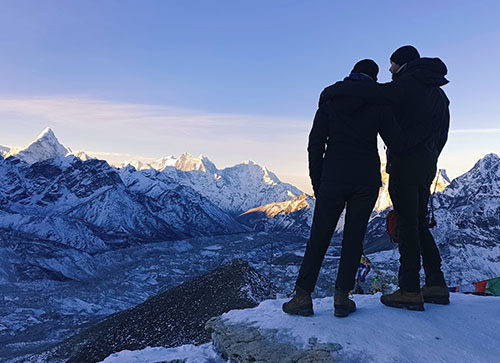
The Manaslu Circuit Trek has become renowned for its raw beauty, tranquil trails, and genuine Himalayan culture. Unlike other more commercial areas of trekking, like Everest or Annapurna, Manaslu remains wonderfully remote, with accommodation and food en route simpler in style, more traditional, and directly linked to local village life. Overnights and daily meals merge into being an integral part of the total adventure while trekking through the lush river valleys, high ridges, yak pastures, and Tibetan-influenced communities.
Most trekkers rely on tea houses, small family-run lodges offering basic rooms with warm meals and genuine hospitality. While facilities gradually improve as this trail gains in popularity, it is still one of the more remote trekking routes of Nepal, for which expectations must be balanced with realities of life in the remote mountains. Rooms are clean but simple, toilets widely vary, heating is limited, and food options depend on the season and altitude.
Understanding what to expect, from shared dining halls to traditional Dal Bhat, from bucket showers to limited electricity, helps you prepare both mentally and practically. This guide covers every important aspect of accommodation and food on the Manaslu Circuit Trek, so you will know exactly what awaits you on this unforgettable journey around the world’s eighth-highest mountain.
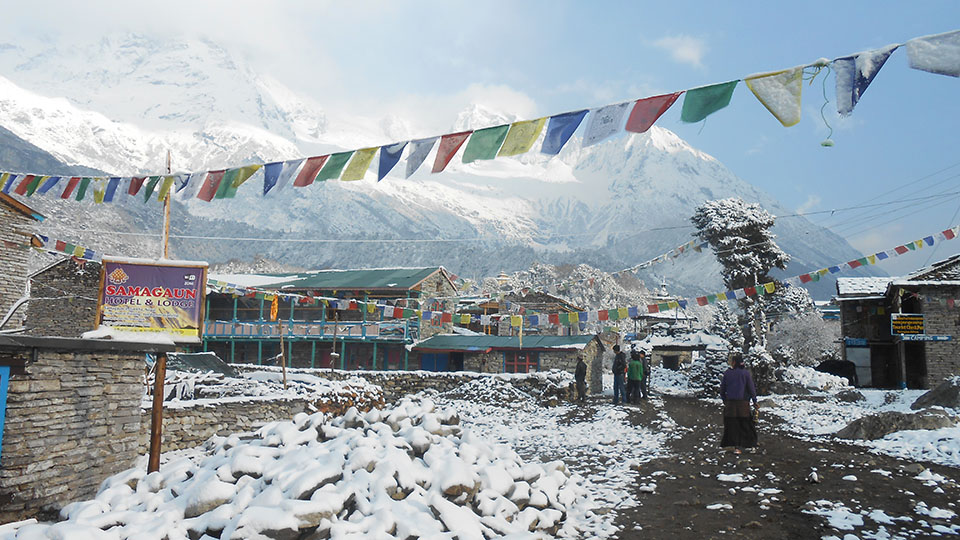
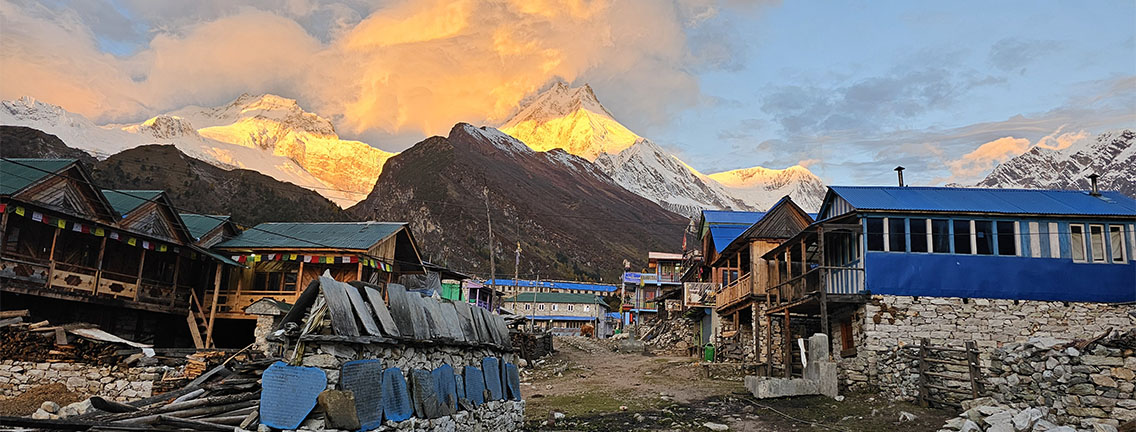
Local tea house located on the route to the Manaslu Circuit trek in Samagau village.
Accommodation on the Manaslu Circuit Trek.
The accommodations along the Manaslu Circuit are designed to offer trekkers a simple, authentic, and comfortable place to lay their head at night, free from the commercialism found in Everest and Annapurna. Many of the tea houses are run by local family owners, sometimes attached to their homes, and reflect the traditional life of the Nubri and Tsum people. The facilities vary greatly from village to village, but you can expect a warm welcome, hearty meals, and a clean place to stay throughout your journey.
Below is a detailed breakdown of what accommodation looks like on every stage of the trek.
Types of Tea Houses Along the Manaslu Trek.
The tea houses along the Manaslu Circuit broadly fall into three categories, determined by the remoteness, altitude, and available resources:
Lower Region: Barpak village to Deng.
These tea houses are usually stronger, more comfortable, built with stone or wood, with better roofing. As the villages are at lower altitudes, it is easier to supply them. Thus, the facility is a bit more modern: Western-style toilets may appear, and dining rooms are somewhat larger. Often, small shops sell snacks, soaps, and basic items.
Mid Region (Deng, Namrung, Lho, Shyala)
Here, the tea houses are considerably better, with some surprisingly good facilities: attached bathrooms, panoramic dining halls, and magnificent views of Manaslu and surrounding peaks. These villages have benefited from improved trekking traffic, so the tea houses are well-maintained and offer a comfortable atmosphere blended with tradition and modernization.
High Region: Samagaun, Samdo, Dharmasala.
As you reach higher elevations, facilities become increasingly basic due to cold temperatures, lack of materials, and limited supply chains. Samagaun and Samdo still offer decent tea houses with clean rooms and good food, but Dharmasala (Larke Phedi) provides only very simple stone rooms with minimal comfort. These higher tea houses prioritize survival essentials rather than luxury.
Room Structure & Sleeping Arrangements.
Tea house rooms are basic but functional, constructed to shelter trekkers from cold winds and temperatures at night:
- Twin-sharing arrangement: Almost all the rooms have two single wooden beds placed with a small table in between.
- Basic bedding: Thin foam mattresses, clean blankets, and pillows are provided, but they are not warm enough for high altitude nights.
- Minimal decoration: Rooms often had bare wooden or stone walls, with little insulation.
- Lighting: One single, thin bulb or a solar lamp is normal. Power outages regularly take place.
- Trekkers are highly recommended to bring their own -150°C to -20°C sleeping bags, as the higher-altitude lodges become bitterly cold after sunset, and a blanket might not be enough. Since rooms are unheated, your sleeping bag becomes the most important gear when night falls.
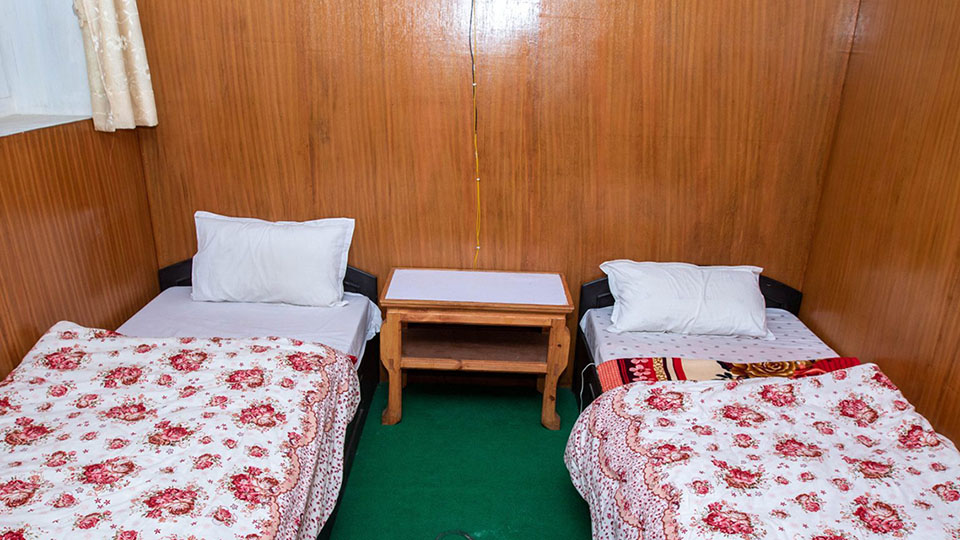
Accommodation Options Available for the Manaslu Circuit Trek.
Toilets & Bathroom Facilities.
Bathroom facilities vary widely and are heavily influenced by altitude:
Lower Areas (Barpak, Sotikhola to Jagat)
- Mix of Western and squat toilets.
- Some attached bathrooms are available.
- Running water is usually available.
- Paid hot showers are available.
Mid to Upper Areas: Deng to Samagaun.
- Shared mostly squat toilets.
- Simple facilities with minimal lighting.
- Flush systems do not always work.
- Some tea houses provide bucket showers with warm water.
High Altitude: Samdo to Dharmasala.
- Extremely basic or outdoor squat toilets.
- Water may freeze and make toilets inoperable.
- No running hot water in the morning and evening.
- Showering is not practical because of cold temperatures, or it is not advisable.
- Hikers should be prepared for basic conditions and bring toilet paper, hand sanitizer, and wet wipes for personal hygiene.
Dining & Common Spaces.
Dining rooms are the heart of every tea house, a common space providing warmth, light, food, and a social atmosphere that together help trekkers unwind after a long day.
- Heated Stove: Most dining halls in the lodge have a central stove fueled by wood or yak dung, making it the warmest room in the lodge.
- Social Hub: Trekkers come here to eat meals, talk with the guides, read books, or play cards.
- Colorful Interiors: Most dining halls are decorated with Tibetan fabrics, photos, symbols, and religious murals.
- Solar Lighting: Dining rooms are well-lit, compared to bedrooms, and sometimes charging services are also offered.
- Teahouses anticipate that visitors will take their dinner and breakfast in the lodge where they will be staying. This system helps to keep the room prices reasonable and assists local families.
Electricity & Charging facilities in Manaslu Circuit trek route;
Electricity on the Manaslu Circuit becomes both more limited and less reliable as you gain altitude. The majority of the teahouses in the lower regions, like Barpak village, Laprak, Soti Khola, Machha Khola, and Jagat, are all connected to small hydropower plants. Since the supply is consistent, charging your phone, camera, or power bank will often either be free of charge or require a minimal fee.
In the mid-region, places like Deng, Namrung, Lho, and Shyala, electricity is generated mainly through solar panels. If it is a sunny day, one can ask for charging; however, since the amount of solar energy is limited and shared by all guests, all tea houses charge within a range of NPR 200-400 per device. Power outlets might only be provided in the dining room, and the hours to charge might be limited.
In the higher areas, particularly Samagaun, Samdo, and Dharmasala, electricity becomes really scarce. Overcast or snowy days significantly decrease the solar power, and tea houses might want to use their batteries for lighting. The charging rate increases up to NPR 400–600, or lodges refuse to charge at all when the power level is low. Given this uncertainty, it is highly recommended for the upper part of the trek to bring with you a 20,000 mAh power bank or a small solar charger.
Wi-Fi Availability in Manaslu Trek.
Wi-Fi on the Manaslu Circuit is far poorer than on either of the two most popular routes: Everest or Annapurna. Paid Wi-Fi is available in some tea houses of Jagat, Deng, Namrung, and Samagaun, but it is slow and not very reliable in bad weather conditions. Such a one-time Wi-Fi password usually costs about NPR 300–500, and only if the signal is strong enough to support messaging.
Once in Samdo and Dharamsala, the Wi-Fi becomes very rare or, in fact, unavailable. It's just too hard for the owners to keep stable networks because of the remote geography and lack of infrastructure.
Many trekkers purchase an NTC SIM card in Kathmandu, which works pretty well up to Namrung. Beyond that point, the mobile network is weak and eventually disappears completely. For safety, local landline phone communication is available in most of the villages and settlements.
Heating & Warmth in Manaslu Circuit Trek.
One of the biggest adjustments for trekkers on the Manaslu Circuit is the heat. Bedrooms are never heated, at any altitude and during any time of year. Wood and yak dung, used as fuel, are scarce commodities in the region, as higher elevations lack trees, and supplies must be carried up.
Usually, tea houses only heat the dining room, firing up a central stove in the evening to warm up that space for dinner. This is the spot where most trekkers will congregate to relax, eat, and finally warm their hands after a day in the elements. By the time dinner has concluded, trekkers have gone to bed; the fire is permitted to burn out in order to save fuel.
Because temperatures at night can drastically drop, often below freezing from Namrung upwards and far colder in Samagaun and Samdo, proper layering is essential. A down jacket, thermal base layers, insulated gloves, wool socks, and a -15°C to -20°C sleeping bag are key to staying warm and comfortable during sleep in unheated rooms.
Accommodation Costs on the Manaslu Circuit Trekking Route.
Accommodation prices on the Manaslu Circuit reflect the altitude, remoteness, and difficulty of transporting supplies. In the lower regions, the cost of a room in a tea house is about NPR 500-1000. These areas are easier to reach, and resources are cheaper. In the mid-region, facilities get a little better, such as Namrung, Lho, and Shyala, and the prices rise accordingly to NPR 800–1200, as the transportation gets more difficult.
The cost is higher, around NPR 1000–1500, in most upper villages, especially Samagaun and Samdo, due to the scarcity of resources and higher operational costs. Accommodation at Dharmasala, popularly known as Larke Phedi or the last stop before Larkya La Pass, is the costliest. Supplies must be carried uphill with the help of mules or porters, while rooms are extremely basic but a necessity for the safety of people in such harsh conditions.
The prices at the tea houses are fair and consistent, which supports local livelihoods. As part of the consideration, trekkers should always eat all their meals at the same house in which they are staying to help support these small mountain communities.
Food on the Manaslu Circuit Trek.
Food on the Manaslu Circuit is one of the most comforting parts of the trek. Teahouse kitchens serve hearty, carb-rich meals designed to refuel long trekking days and help with acclimatization. Menu options change with altitude and season, and while choices narrow at higher elevations, the food is usually nutritious, tasty, and plentiful. Below, each aspect is explained in detail.
Standard Daily Meal Pattern & Timings.
Teahouses follow a simple, predictable meal rhythm matched to trekking schedules.
- Breakfast (06:00–08:00): Early starts are common, so breakfast is served before dawn or at first light. Typical breakfasts include porridge, oats, pancakes, eggs (omelette/scrambled), toast, and sometimes local options like roti or Tibetan bread. Hot tea and coffee are standard.
- Lunch (11:30–14:00): Served at teahouses along the route or packed as a takeaway for trekkers who start early. Popular lunch items are dal bhat (rice and lentils), noodles, fried rice, soups, and sandwiches.
- Tea Time (15:30–17:00): Many lodges offer pastries, cake, and hot drinks, perfect for an energy boost after a long day.
- Dinner (18:00–20:00): The main meal, large portions of dal bhat, vegetable curry, meat stews, or noodle dishes. Cooking is usually finished by 8 pm. Guests often gather in the dining room around the stove for dinner.
Teahouses are accustomed to hikers’ schedules; if you need an earlier or later meal, ask the owner in the morning, and they will usually accommodate you.
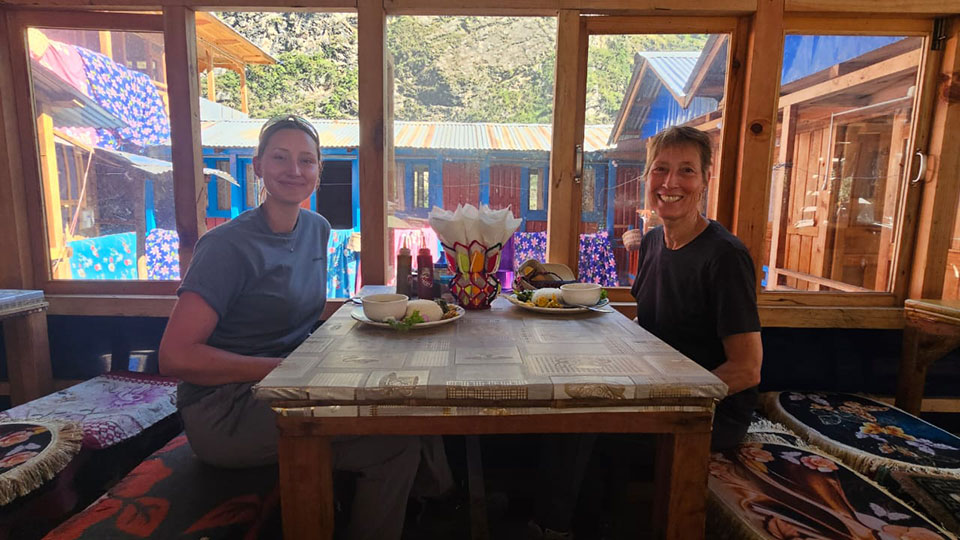
Our Clients Enjoying lunch during the trek on the Manaslu Circuit.
Common Menu Items & What to Expect.
Menus start wide in the lower regions and narrow at higher altitudes. Here are staple items across elevations:
- Dal Bhat (rice & lentils): The backbone of Nepali trekking food, served with vegetable curry, pickles, sometimes meat, and extra rice on request. Highly nutritious and filling.
- Thukpa & Momo: Tibetan noodle soup (thukpa) and dumplings (momo) are popular comfort foods, especially at mid-altitudes.
- Noodles & Fried Rice: Quick, warm, and carb-dense options, good for having a heavy lunch.
- Porridge, Oats & Pancakes: Common breakfast choices, warming and easy on the stomach.
- Soups & Stews: Lentil or vegetable soups are common in higher elevations where lighter meals are preferred before sleeping.
- Eggs: Omelets, boiled, or scrambled eggs provide protein at breakfast or dinner.
- Snacks & Sweets: Biscuits, chocolate, cakes, and local bread for tea time.
- At higher lodges (Samagaun, Samdo, Dharmasala), the menu may be limited to dal bhat, noodles, soups, tea, and simple breakfasts.
Nutrition & Calorie Needs.
Trekking burns a lot of calories, estimates range from 3,000–5,000 kcal/day depending on pace, altitude, and load. Meals on the Manaslu Circuit are intentionally high in carbohydrates to replenish glycogen stores, with adequate protein and fats to aid recovery.
- Carbohydrates like rice, noodles, and bread give energy for long days.
- Protein is for muscle repair-lentils, eggs, and occasional meat.
- Fats - butter, oil, nuts - facilitate longer energy release and help keep you warm.
- For maximum performance and acclimatization, eat small meals and snacks; do not wait until you get really hungry.
Food Availability by Altitude.
- Lower & Mid Regions (Soti Khola to Namrung): Extensive menus; tea houses stock fresh produce, eggs, meat, and even some packaged goods.
- Upper Regions (Samagaun, Samdo): Fresh produce becomes limited; root vegetables, dried goods, and potatoes are common. Meat might be seasonal and in short supply.
- Dharmasala / Larkya Phedi: Very limited choices, expect dal bhat, noodles, soups, porridge, and tea. Carry extra snacks for the Lake Pass day.
- Expect menu simplification and slight price increases the further up you go.
Food Safety & Hygiene.
Most teahouse kitchens are clean by local standards, but hygiene can vary. Follow these tips:
- Prefer cooked over raw: Hot, freshly cooked meals are safest. Avoid raw salads at higher altitudes where water may be untreated.
- Drink purified water: Bring purification tablets or a filter. Boiled water or treated water is safest; many places sell boiled water for a fee.
- Check reheating practices: If food appears reheated or leftovers are served cold, request freshly cooked alternatives.
- Carry basics: Insect repellent, antibacterial wipes, and toilet paper.
- Local hosts take pride in feeding trekkers well, politely communicating dietary restrictions to ensure safe meals.
Dietary Restrictions & Special Diets.
Vegetarian, vegan, and gluten-free options are generally available in lower and mid regions but become limited higher up. Tips for special diets:
- Vegetarians: Dal bhat and vegetable curries are widely available; request no ghee if vegan.
- Vegans: Inform cooks that some dishes may use butter or ghee; request oil-based preparation. High-altitude options get sparse; carry vegan protein bars.
- Gluten-Free: Rice-based meals (dal bhat) are naturally gluten-free; be cautious with noodles and bread.
- Allergies: Clearly explain allergies to your guide and host; language barriers exist, so keep translations or allergy cards handy.
- For strict dietary needs, pack supplemental food (protein powder, energy bars, dehydrated meals).
Hot Beverages, Hydration & Tea House Etiquette.
Hot beverages are central to tea-house culture: tea, milk tea, butter tea (in some places), instant coffee, and hot lemon. These help warm you after cold days and aid hydration. Order a hot drink on arrival; it helps the kitchen warm up and prepares your meal.
- Water usage tip: Bring a refillable bottle; most lodges will boil/purify the water for a small fee.
- Eat where you stay: It’s customary and expected to order meals at your lodge; this supports local families and keeps room costs reasonable.
Polite behavior, patience during busy eating hours, and thanking the host go a long way.
Snacks & Emergency Food.
Always carry lightweight, high-calorie snacks: energy bars, nuts, dried fruit, and chocolate. These are invaluable for:
- Pre-dawn starts when kitchens are closed.
- High-energy summit/pass days (Larkya La).
- Delays beyond expectation or incompletely available menus.
- Pack extras for contingency days in case progress gets delayed.
Special Considerations for High Pass Day (Larkya La)
The day of crossing the Larkya La Pass 5106 meters is long and strenuous. Food Strategy:
- Early breakfast: Have a heavy, carbohydrate-based breakfast a good while before dawn.
- Snacks and lunch packed: Sandwiches, energy bars, and electrolyte drinks on the pass.
- Hydrate constantly: Cold weather blunts thirst; sip regularly.
- Light evening meal: After crossing, a warm, easy-to-digest meal aids in recovery.
- Teahouses at Dharmasala provide a final fueling point, stocking up on snacks and water here.
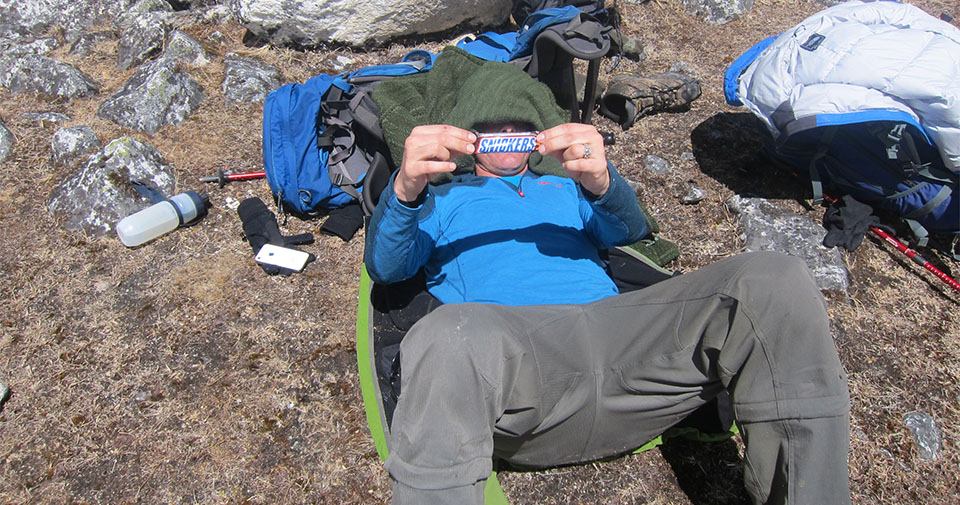
Snacks and Emergency Food.
Recommended Food Packing List for the Trek.
Bring the following personal food items to ensure comfort and nutrition:
- Energy/protein bars 6–10
- Electrolyte powder sachets (10–20)
- Instant oatmeal packs (4–6)
- Small packets of peanut butter or nut butter
- Trail mix or nuts (200–400 g)
- Small, lightweight, high-calorie items are best.
Sustainability & Respectful Eating.
Support local communities by eating locally prepared meals. Avoid excessive packaged goods that create waste. Carry a small reusable cutlery set and a collapsible bowl if you prefer, and always dispose of trash responsibly.
Manaslu Circuit Trek Accommodation and Food Guide Conclusion.
Food on the Manaslu Circuit Trek is not only about refueling your body, but it is an essential part of the Himalayan experience. Every meal available on the trail signifies local culture, the resilience of mountain communities, and the warmth of Nepali hospitality. While options become simpler at higher altitudes, the dishes remain hearty, nutritious, and perfectly suited to support long days of trekking and acclimatization. Knowing what to expect, menu variety, pricing, safety, and dietary options helps trekkers prepare better and enjoy the journey sans any stress.
Most importantly, dining on local fare like dal bhat, thukpa, and Tibetan bread means you're supporting the families operating teahouses in this region. Eating on the Manaslu Circuit trekking route is both enjoyable and reliable with appropriate planning and some personal snacks for extra energy. Whether you are a beginner or experienced hiker, you can confidently trek, knowing each day will end with a warm, satisfying meal and authentic hospitality.