Muktinath temple serves as a symbol of religious harmony in Nepal, where both Hindus and Buddhists have historically worshipped at the same site, mutually respecting and including each other.
The well-known Muktinath Temple tour takes a place of the sacred and important religious temple and a Pilgrimage place for both Hindus and Buddhists. The Temple is located in the Mustang District and situated about 18 KM northeast of Jomsom in the west-central part of Nepal, at an altitude of 3760 meters on the foot of one of the world’s biggest passes, Thorong-La Pass (5416M).
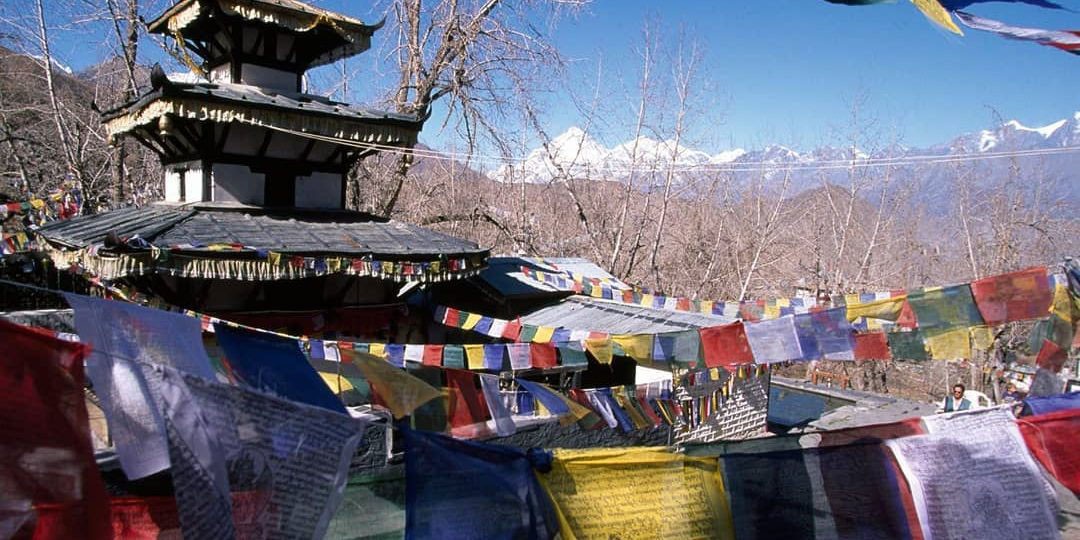
The holy shrine at Muktinath is in a grove of trees and includes a Buddhist Gompa and the pagoda-style temple of Vishnu Mandir, etc. There are seven historic villages around Muktinath: Ranipauwa, Jharkot, Khinja, Putak, Jhong, Chhyonkhar, and Purang. And the main ethnic group of the valleys is the Thakali and Bhotias.
Legend of Muktinath Temple
The Tibetan Buddhist tradition states that for this reason, Guru Rinpoche, also known as Padmasambhava, the founder of Tibetan Buddhism, had meditated at Muktinath, where he gained lifetime achievement of spiritual knowledge, while on his way to Tibet in the 12th century.
The waterway downstream from Muktinath along the Kali Gandaki is the source of all Silas or Shaligrams that are required to establish a temple of Vishnu anywhere in the world. It is considered to be one of the holiest places of pilgrimage for Hindus, Buddhists, and Vaishnavas. It has 108 water stone waterspouts, and this number carries great significance in Eastern philosophy.
Here in the early 19th century, the Hindus consecrated a Vishnu temple and named it Muktinath – Lord of Liberation. Against a backdrop of incredible starkness, you can sit and stare to the south at the snow-covered Annapurna range, or to the north at the Tibetan plateau.
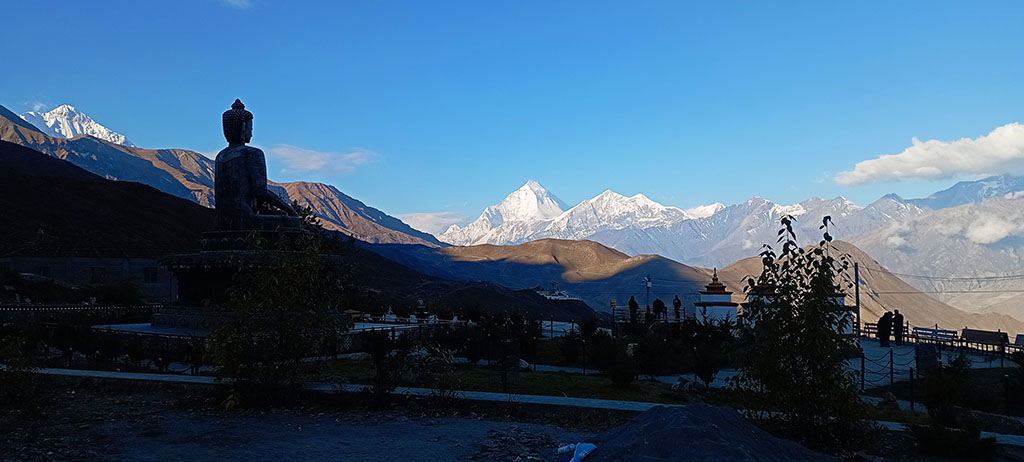
A view of the Buddhist statue and Mount Dhaulagiri from Muktinath.
About Muktinath Temple Tour
The Muktinath Temple is one of the most ancient Hindu temples of God Vishnu. The Pagoda-style Muktinath Temple is a symbol of the religious symbiosis between Hindus and Buddhists. Hindus regard Muktinath as Vishnu, whereas Buddhists regard it as Buddha. The main shrine of Muktinath is a pagoda–shaped temple dedicated to Lord Vishnu. The Statue is of gold and is tall enough to compare with a man. They depict metal statues of lord Vishnu, Goddess Laxmi, Saraswati, Janaki, Garuda, Lava-Kush, and Sapta Rishis.
Muktinath is the only shrine where a combination of Hindu and Buddhist priest Dom is found. A Shradha (the rituals after the death) at the confluence of Kag khola and river Kaligandagi at Kagbeni, and worship after that in the shrine of lord Muktinath is heavenly and boon-bestowing. One would be enlightened and thrilled to have the Darshan of Lord Vishnu flanked by the idols of His divine consorts, Goddess Lakshmi and Goddess Earth, on the right and left.
The main attraction of the Muktinath Temple Tour:
- A combination of both Hindu and Buddhist Religious temples and monasteries.
- Pagoda Style Temple.
- 108 waterspouts.
- The old Buddhist Monasteries.
- The burning water flame “Jwala Mai Temple”.
- Fossils “Shaligrama” symbol of Lord Vishnu.
- Panoramic Views of Annapurna Himalayas and Dhaulagiri Himalayas.
- Tour Muktinath Temple through the deepest gorge in the world (Kali Gandaki river gorge.
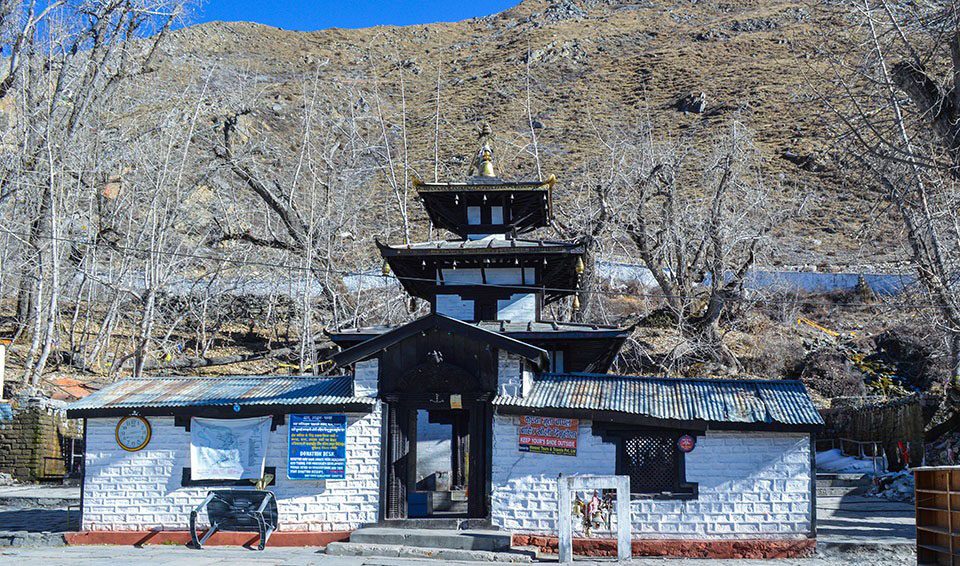
The well-known Muktinath Temple is a sacred and important religious site and a pilgrimage place for both Hindus and Buddhists, a must-visit once in a lifetime.
How to get to Muktinath Temple?
There are many different ways to get to the Muktinath Temple Tour.
By Airplane / Heli:
There are several daily flights from Kathmandu to Pokhara, and take a Next morning flight to Jomsom, then hike to Muktinath for around 6 hours. And the same way back.
There is a helipad near the temple; charter helicopter services are available from Pokhara & Kathmandu all the way to Muktinath, which takes around forty-five minutes to reach from Pokhara and 2.30 hrs from Kathmandu. The helicopter can be hired only when the weather permits. Arriving by helicopter for a longer period of stay is not recommended because of the risk of acute mountain sickness.
Duration of flight:
- Regular flight from Kathmandu to Pokhara is 25 Minutes.
- Regular flight from Pokhara to Jomsom is 17 Minutes.
- Chartered Heli from Kathmandu to Muktinath in 1:30 hours.
- Chartered a helicopter from Pokhara to Muktinath, 45 Minutes.
By Road:
At the moment, road access is available all the way to Muktinath. So one can take a direct Local Bus from Kathmandu to Jomsom and take another Jeep or Bus to Muktinath. The other way is driving via Pokhara and continuing to Muktinath, and the same way back by Private Vehicle. It may take10 hrs to drive by private transport in Normal road Conditions (4-wheel drive Jeep)
Duration of Drive:
- Local Bus from Kathmandu to Jomsom, 16 to 18 Hours.
- Private Vehicle from Kathmandu to Jomsom Muktinath, 14 to 16 Hours.
- Tourist Bus from Kathmandu to Pokhara, 7 hours.
- Bus from Pokhara to Jomsom, 9 – 10 hours.
- Jomsom to Muktinath 1 hour.
By Trekking / Hiking:
We can also trek via regular Annapurna Circuits Treks over one of the Biggest Throng-La Passes and stop down at Muktinath, or take a classic Annapurna Trekking Route from Beni, which may take around 5/6 days to reach Muktinath.
(Note: Apart from walking to the Religious temple Muktinath all the way, there are many ways one can travel, depending on time and budget.
Best Time to Visit Muktinath:
The most suitable time to visit the Religious temple Muktinath is from September to November and March to May. Considering that from December to February it can be snowy and cold, but still accessible to travel. June to August is raining season. As the weather conditions would not be safe enough to travel in these months.
Destinations You Will Visit During the Muktinath Tour.
01: Pokhara and Around.
Pokhara is Nepal’s top destination for adventure and leisure, situated 205 kilometers west of Kathmandu at an elevation of 822 meters. It is famous worldwide for its tranquil lakes, lively dining options along the Lakeside, and stunning panoramic views of the Machhapuchhre and Annapurna mountain range.
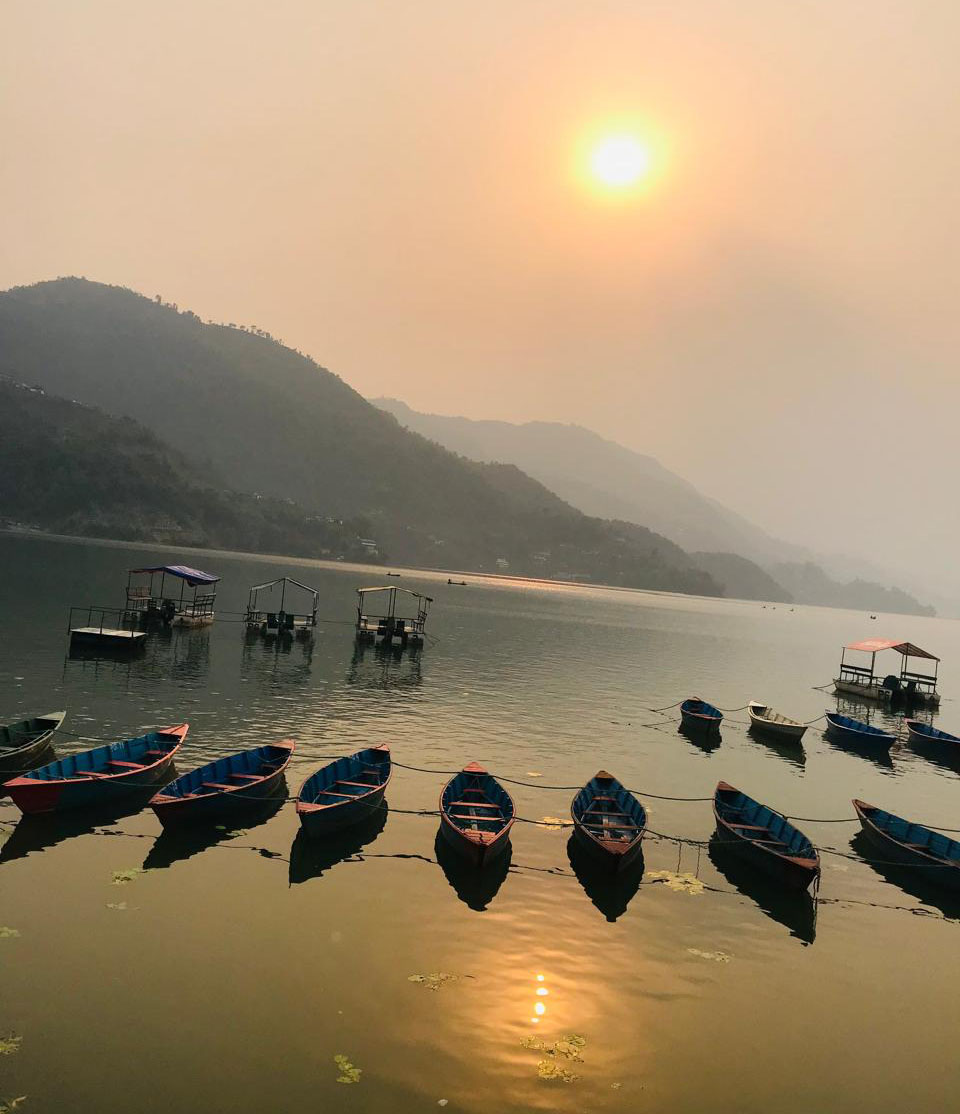
Enjoy a breathtaking sunset view on Phewa Lake, Pokhara, Nepal.
(a) Phewa Lake or Phewa Tal
Phewa Lake, also known as Phewa Tal, is the third-largest freshwater lake in Nepal, formerly called Baidam Tal. It is located in the southern part of the Pokhara Valley, which includes Pokhara city and areas of Sarangkot and Kaskikot. The lake is renowned for reflecting Mount Machhapuchhre and the other peaks of the Annapurna and Dhaulagiri ranges on its surface.
(b)Tal Barahi Temple
Tal Barahi Temple, also known as the "Lake Temple" or "Barahi Temple," is a Hindu shrine dedicated to the goddess Barahi. This temple is located on a small island in the middle of Phewa Lake. Since it is situated on an island, the only way to reach the temple is by boat. The temple symbolizes the manifestation of Ajima, representing the female divine force.
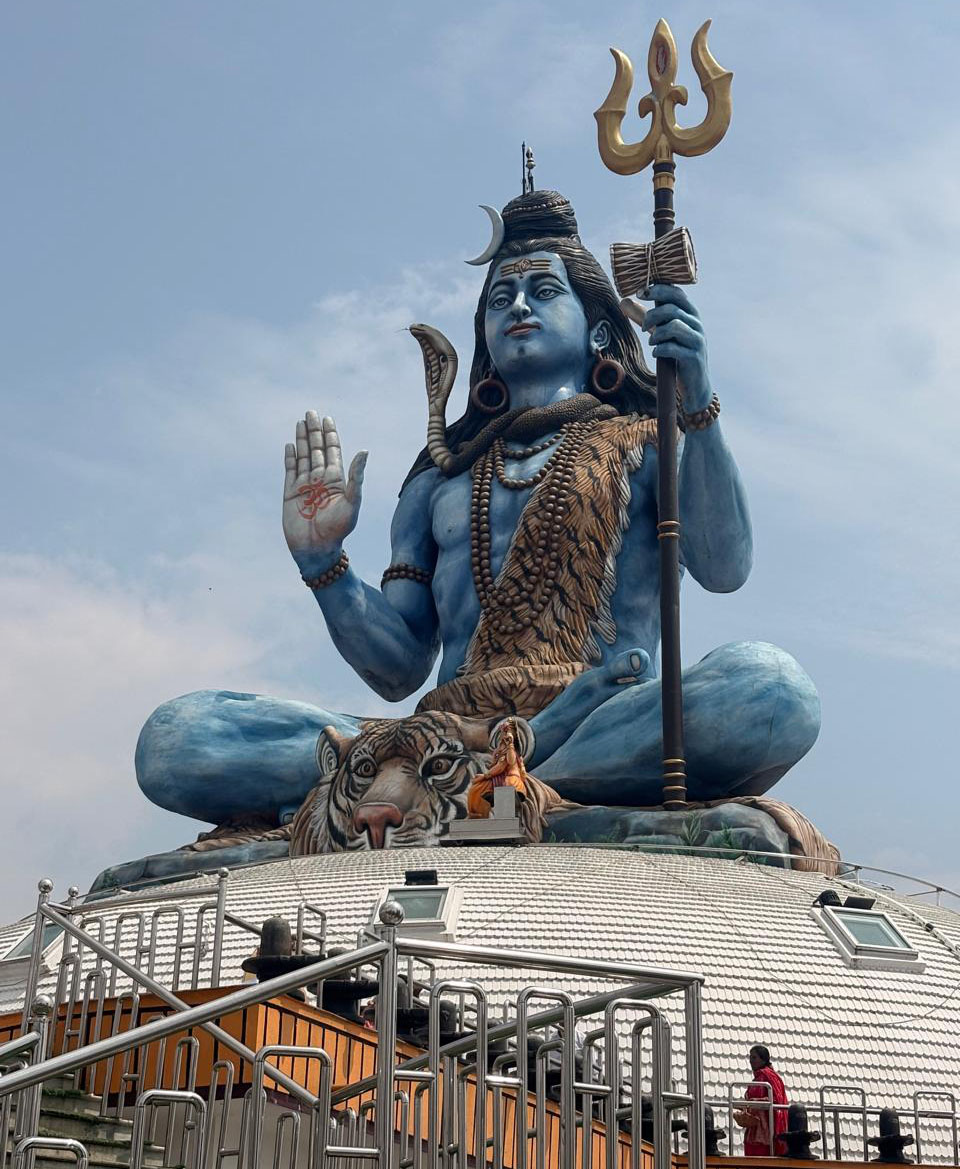
Explore the second-tallest Shiva Statue at Pumdikot.
(c) Pumdikot Shiva Statue.
Pumdikot is a hill station near Pokhara in Nepal. It features a viewpoint at an altitude of 1,500 meters above sea level and hosts the second-tallest statue of Shiva in Nepal, after the Kailashnath Mahadev Statue.
(d) World Peace Stupa (Shanti Stupa)
Shanti Stupa in Pokhara is the first World Peace Pagoda in Nepal and the seventy-first pagoda built by Nipponzan-Myōhōji worldwide. Nepal is home to two of the eighty peace pagodas around the globe: Shanti Stupa in Pokhara and Shanti Stupa in Lumbini, the birthplace of the Buddha.
The word "Shanti" is derived from Sanskrit, meaning "peace," and it is also commonly used in both Nepali and Hindi languages. Therefore, Shanti Stupa translates to "Peace Pagoda." The Shanti Stupa shrine was constructed as a symbol of peace and offers a panoramic view of the Annapurna range, Pokhara city, and Phewa Lake.
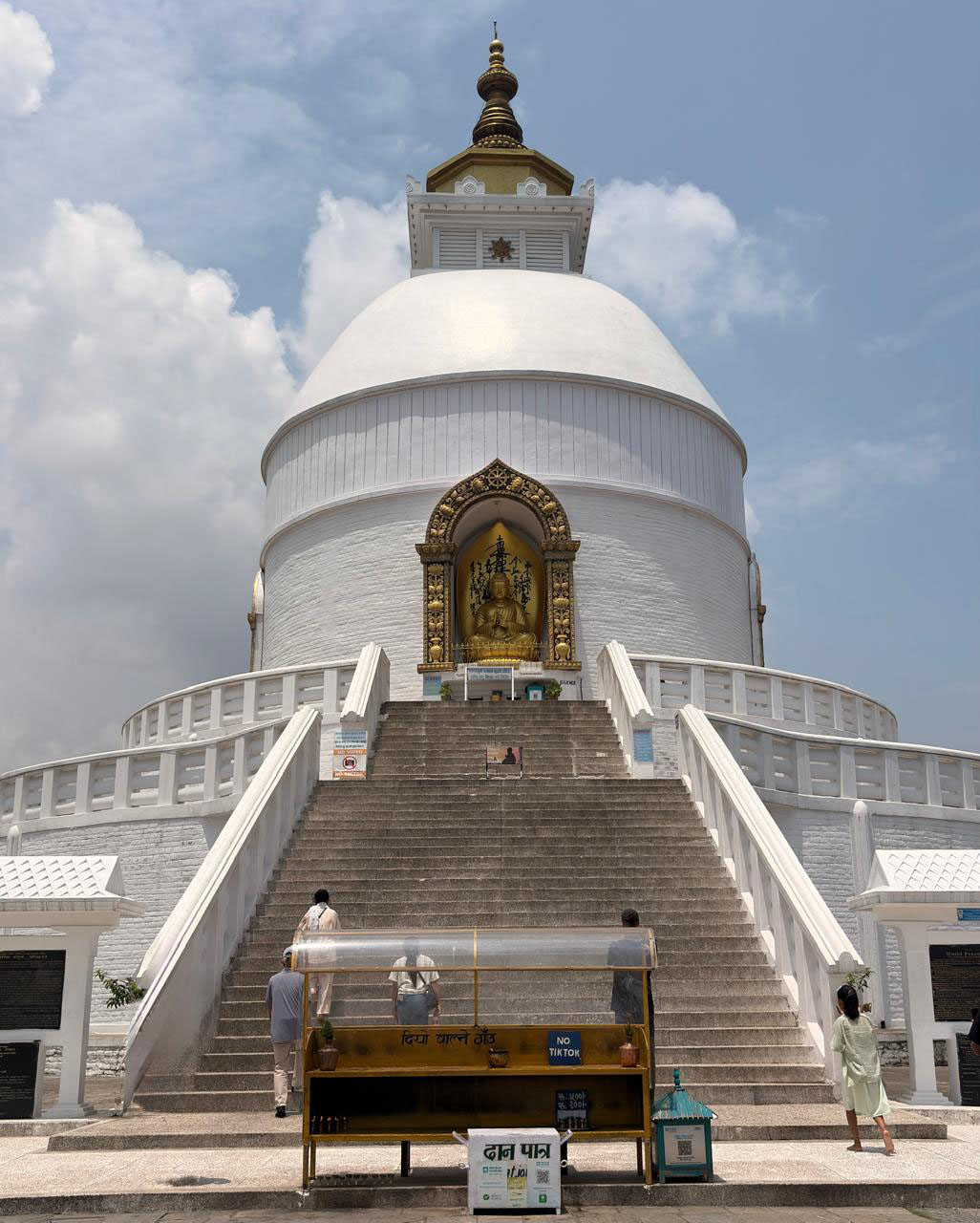
World Peace Stupa (Shanti Stupa), Pokhara, Nepal.
(e) Gupteshwor Mahadev Cave
Gupteshwor Mahadev Cave, located in Pokhara, opposite Devi's Falls, is one of Nepal's most sacred and longest caves. It stretches for over 2,950 meters and is revered for housing a naturally formed Shiva Lingam. The cave also provides a dramatic view of the underground river of Devi's Falls.
02: Kushma Bungee Footbridge
Kushma Bungy Footbridge is the fourth and most impressive high-level footbridge in the mountainous tourist Kusma Parbat. This remarkable structure features a main span of approximately 500 meters, designed similarly to Russia's Sochi AJ Hackett Skybridge Bungy site. The walkway is suspended 3 meters below eight parallel steel cables. Opened in 2019, it is one of the highest public bungee jumping sites in the world.
03: Kalika Bhagwati Temple, Baglung.
Kalika Bhagawati Temple, also known as Baglung Kalika Bhagawati Temple, is an important Hindu temple located southeast of the town of Bağlung in western Nepal. The presiding deity of the temple is Kalika (or Kali), one of the fiercest forms of Shakti and the consort of Shiva.
The temple courtyard features four entrances, each facing a different cardinal direction. The temple complex also includes a collection of smaller temples dedicated to various deities, including Shiva, Radha Krishna, and Lakshmi Narayan, among others.
04: Tatopani Natural Hot Spring.
Tatopani Natural Hot Spring is located along the Kali Gandaki corridor in western Nepal, situated between Pokhara and Muktinath. Most visitors access it by road from Pokhara, particularly during the Muktinath Yatra. The hot spring features cement pools filled with natural water that flows from the earth at approximately 69°C. This water is cooled to a comfortable soaking temperature of 36°C to 45°C. The facility includes separate areas for men and women, basic changing rooms, and a small adjoining canteen.
05: Rupse Chhahara - Waterfall in Nepal
Rupse Chhahara, also known as Rupse Falls, is an impressive waterfall approximately 300 meters tall, located along the Pokhara-Muktinath Yatra route on the Pokhara-Muktinath highway. This stunning waterfall is a popular roadside attraction for travelers heading to the Muktinath Yatra. It provides a scenic and refreshing break for anyone traveling between Pokhara and Muktinath or trekking through the Annapurna Circuit.
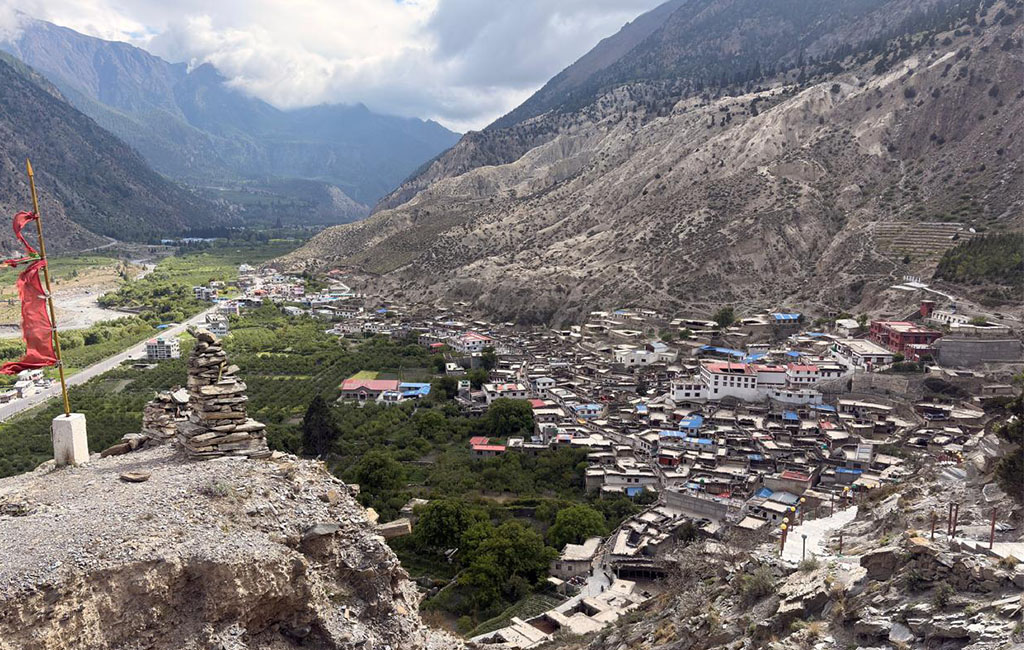
Traditional Local Village, Marpha Village.
06: A Traditional Local Village, Marpha Village.
Marpha is a traditional village in Nepal, often referred to as the "Apple Capital of Nepal." It is renowned for its flat-roofed, whitewashed stone houses, winding cobblestone alleys, and tranquil orchards. Located at an altitude of 2,650 meters in the Kali Gandaki Valley, Marpha is situated along the route to the Muktinath Tour.
The village features beautiful traditional monasteries, including a stunning 300-year-old cliffside monastery. It is home to the warm and hospitable Thakali community, which allows visitors to experience a rich blend of Tibetan and local Buddhist heritage. Marpha is particularly famous for its fresh apples, apple pie, and locally produced apple brandy and cider.
07: Kagbeni Village - Pitri Moksha Sthala (a site for ancestor liberation rites)
Kagbeni is a historic village in Nepal's Mustang District, featuring a medieval-style layout. Situated at the confluence of the Kali Gandaki and Jhong rivers, it sits at an elevation of 2,804 meters and serves as the official gateway to the restricted Upper Mustang region. The village is renowned for its narrow alleys, flat-roofed mud-brick houses, and its rich, centuries-old culture.
It is a well-known Pitri Moksha Sthala, a holy place for ancestor liberation, where Hindus perform sacred Shraddha and Pitri Puja rituals to assist departed souls in finding salvation. The area is rich in both Hindu and Tibetan Buddhist traditions. Notably, it houses the centuries-old Kag Chode Thupten Samphel Ling Monastery, also known as the Red Monastery. Additionally, the riverbed is home to highly revered sacred Shaligram fossils.
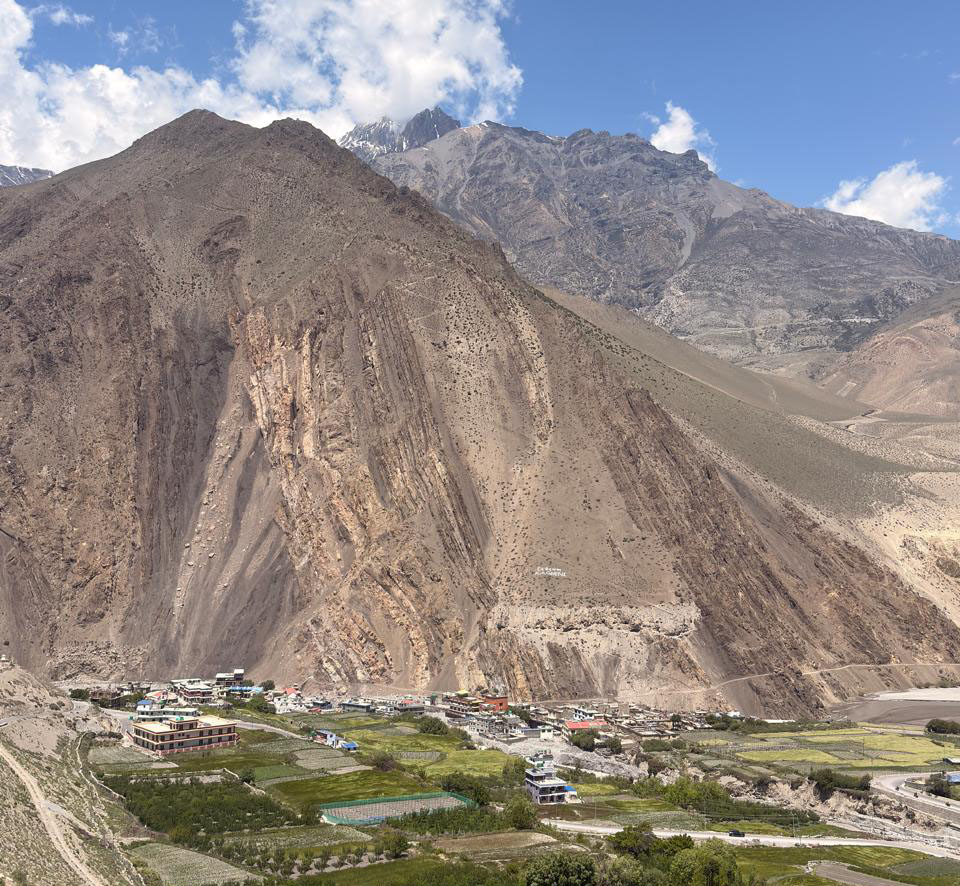
Kagbeni Village - Pitri Moksha Sthala
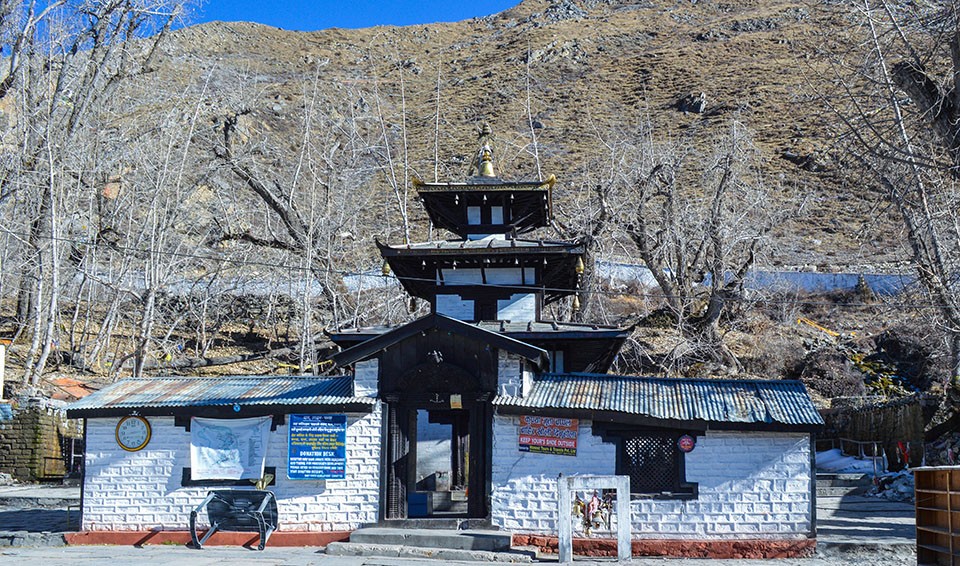
08: Muktinath Temple.
Muktinath temple serves as a symbol of religious harmony in Nepal, where both Hindus and Buddhists have historically worshipped at the same site, mutually respecting and including each other.
The Muktinath temple is recognized as one of the 108 Divya Desams of Sri Vaishnavism, and it is the only Divya Desam located outside of India. Additionally, it holds the status of being one of the eight most sacred shrines in this tradition, referred to as the Svayam Vyakta Ksetras or Sthalas. The temple complex is also considered one of the 51 Shakta Pithas, which are associated with the head of the goddess Sati. Known as Mukti Kshetra, which translates to "the place of liberation (moksha)," it is one of the Char Dham in Nepal.
09: Dhumba Lake.
Dhumba Lake is situated in the Mustang district of Nepal at an altitude of 2,830 meters. It is approximately 5 kilometers west of Jomsom, near Thini village. The lake measures about 150 meters in length and 100 meters in width. It is fed by meltwater from Mount Nilgiri. Dhumba Lake is considered sacred by both Buddhist and Hindu pilgrims.
10: Jomsom Bazar (District headquarters of Mustang)
Jomsom is the district headquarters of Mustang, Nepal, located at an elevation of 2,760 meters in the Kali Gandaki Valley. Situated in the rain shadow of the Annapurna range, this trans-Himalayan town is renowned for its dry, rocky landscape, stunning views of Dhaulagiri and Nilgiri, and its famous afternoon winds.
The town is the main stop for pilgrims traveling to the sacred Muktinath Temple. Jomsom acts as both the logistical entry point and the permit checkpoint for those trekking into the restricted, culturally Tibetan area of Upper Mustang. The town is primarily inhabited by the Thakali community, known for their warm hospitality and unique, flavorful cuisine.
11: Kaligandaki River
The Kali Gandaki is a major sacred river in Nepal and a prominent tributary of the Ganges. Originating near the Tibetan border, it carves through the Himalayas to form the Kali Gandaki Gorge—one of the deepest canyons on Earth.
The river is famous for both its natural grandeur and cultural importance across a few key areas:
Shaligrams: The river is the sole source of Shaligram Shilas, which are highly revered black ammonite fossils worshipped by Hindus as direct incarnations of Lord Vishnu.
Sacred Confluences: Along its route, there are holy pilgrimage sites such as Muktinath, Kagbeni, and Devghat, where it merges with the Trishuli River to become the Narayani River.
Extreme Depth: The gorge plunges to a staggering depth of 5,571 meters (18,278 feet), situated directly between the majestic 8,000-meter peaks of Dhaulagiri and the Annapurna massif.
Muktinath Tour Cost | Muktinath Yatra | Muktinath Tour Package.
Muktinath Tour Cost for Nepali Travellers.
Tour Cost NPR = 40,000 per person with Private Jeep or Bus.
Minimum group size 6 Peoples.
_________________________________________________________
Muktinath Tour Cost for Indian Travellers.
Tour Cost INR = 28,000 per person with Private Jeep or Bus.
Minimum group size 6 Peoples.
Experience the most auspicious pilgrimage to Kailash Mansarovar Yatra with full spiritual and logistical support.
Muktinath Tour Itinerary
Day 01: Arrive at Kathmandu. (1335 Meters).
Day 02: Drive to Pokhara. (810 Meters).
Day 03: Drive to Jomsom 2700 meters).
Day 04: Drive to Muktinath (3760 Meters) and Explore around.
Day 05: Visit Muktinath Temple and Drive Back to Pokhara.
Day 06: Sightseeing in Pokhara.
Day 07: Drive Back to Kathmandu.
Day 08: Final Departure.



 Altitude: 1335 m
 Accommodation: Hotel
 Meals: Breakfast
